The US hopes that the differences will be resolved peacefully, officials said in Washington.
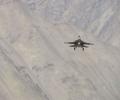
The frequency of day and night operations by frontline fighter jets is a signal that India will continue to put pressure on China until the status quo ante is restored in all the areas in eastern Ladakh including Pangong Tso, Gogra and Hot Springs, government sources said.
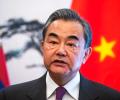
Addressing a symposium on the international situation and China's foreign relations in 2022, Wang said both countries have maintained communication through diplomatic and military-to-military channels.
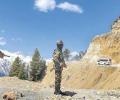
This is the third round of Corps Commander-level talks being held. The first two rounds had taken place in Moldo on the Chinese side of the LAC.
'Both sides had candid and in-depth discussions over easing the current border situation and reached positive common understandings,' it said. 'Both sides welcomed the progress achieved in the recent military and diplomatic meetings, agreed to stay in dialogue and consultation, and stressed the importance to promptly act on the consensus reached in the commander-level talks between Chinese and Indian border troops, and complete disengagement of the front-line troops as soon as possible,' it said.
Chinese Foreign Ministry spokesman Zhao Lijian expressed this hope hours after India and China accused each other of firing in the air near the Pangong lake at the Line of Actual Control(LAC) in eastern Ladakh on Monday.
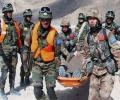
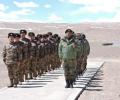
The day-long exercise held "is part of the ongoing initiatives being taken by India and China to ensure greater interaction between troops stationed along the Line of Actual Control.

Prime Minister Manmohan Singh has said that commitment by Indian and Chinese leaderships to maintain peace and tranquillity at borders pending boundary settlement is an important guarantor for further progress in Sino-Indian ties, particularly growth of 2.5 billion people.

The sources also said both the Indian and Chinese troops are firmly holding on to their respective positions at the Line of Actual Control.

'We must acknowledge China will use Pakistan against India.' 'We all need to know that these two countries are ready to destabilise India at all times.'
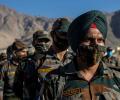
'China is mindful of the fact that it is not confronting the Indian Army of 1962. But the sabre rattling will continue.'

External Affairs Ministry Spokesperson Anurag Srivastava said India is committed to resolve all issues through dialogue, noting the way ahead to address the issue is negotiations.
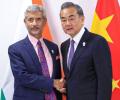
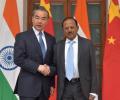
The joint statement said Jaishankar and Wang agreed that both sides should take guidance from the series of consensus reached between leaders of the two countries on developing India-China relations, including not allowing differences to become disputes.

India and China on Monday decided to deepen bilateral defence ties and maintain peace and tranquillity at the Line of Actual Control besides strengthening cooperation against terror, including at the international level.
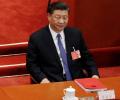
Observers say China should re-address its policies towards India or else it will continue to face flare-ups increasing the tensions between the two countries at a time China's increasing tension with the US over Taiwan and the South China Sea besides the downturn in the Chinese economy which is hit hard by the zero-covid policy.
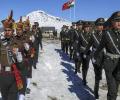
In a joint statement, the two armies said it was agreed to earnestly implement the important consensus reached by the leaders of the two countries and ensure that the frontline troops exercise restraint and avoid misunderstanding and miscalculation.
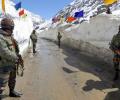
Chinese Ambassador Sun Weidong said India and China are able to properly manage their differences, and called upon New Delhi to avoid taking actions that may 'complicate' the situation in eastern Ladakh.

The enhancement of combat capability by the two armies in the region came even as both the countries continued their efforts to resolve the dispute through talks at military and diplomatic levels.
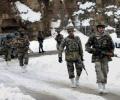
Experts have said the economic cost of China's misadventure in the last couple of months in eastern Ladakh and South China will be "massive" as it has "exposed" Beijing's "real face" when the entire world is fighting coronavirus.

The navy has significantly expanded its deployment in the Indian Ocean Region deploying a plethora of warships and submarines to create pressure points on China as the maritime space around the Malacca Strait is very critical for its supply chain through sea routes.

Against the backdrop of recent incursions by Chinese troops into India, the two countries are working to conclude a new border defence agreement with an aim of signing it when Prime Minister Manmohan Singh travels to Beijing possibly in October.

Xi will attend the second informal meeting with Modi at Mahabalipuram near Chennai from October 11 to 12 and pay a state visit to Nepal on October 13, Foreign Ministry spokesperson Hua Chunying announced on Wednesday.

'The Chinese staying put in Pangong Tso, and creating a buffer zone on Indian territory in other areas,' a senior serving general tells Ajai Shukla.

But Modi and Xi will attend a BRICS leaders meeting in Hamburg.

External affairs ministry spokesperson Raveesh Kumar said India does not comment on the internal affairs of other countries and similarly expects other countries to do likewise.

'They know that India is no pushover.' 'We have to be extremely vigilant, remain ready and keep strengthening our positions.' 'We have to be militarily strong, whatever be the cost.'

'Modi's recent decisions to improve India-China relations, adjust India's neighbourhood policies and to rebalance India's ties with the major powers are linked to his political agenda.' 'Of course, the good part is that this agenda is also in the national interest,' says Ambassador M K Bhadrakumar.
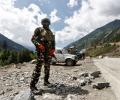
At a virtual media briefing, Ministry of External Affairs (MEA) Spokesperson Anurag Srivastava said disengagement of troops is a complex process which would require mutually agreed 'reciprocal actions'.
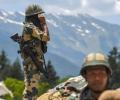
Gen Naravane said India is dealing with China in a "firm" and "non-escalatory" manner to ensure the sanctity of its claims in eastern Ladakh, and that it was even open to initiating confidence-building measures.
Sources said India will not lower its guard and will maintain the current state of very high-level of combat readiness in eastern Ladakh till there are visible changes in the ground situation.
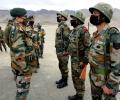
As per the sources, the discussions between the two sides include pulling back tanks and armoured vehicles from their present positions, and some development in this regard is likely to take place in the next few days.

External Affairs Minister S Jaishankar said on Friday that India and China are going through a 'particularly bad patch' in their ties because Beijing has taken a set of actions in violation of agreements for which it still doesn't have a 'credible explanation' and it is for the Chinese leadership to answer where they want to take the bilateral relationship.
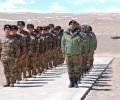
The sources said both sides held extensive deliberations on modalities for disengagement of troops from all the friction points in eastern Ladakh at the talks.
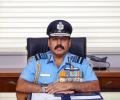
Air Chief Marshal Bhadauria was at the Leh IAF base on Wednesday where he reviewed operational preparedness of the force in effectively guarding the sensitive border areas in eastern Ladakh where Indian and Chinese armies have been on a nearly six-week standoff.

Replying to clarifications sought by MPs in Rajya Sabha on his statement on the border row, the minister said skirmishes and face-off with China in the last few months have been primarily over the issue of patrolling the Ladakh border.
In the next few days, Indian Army will carry out a detailed verification to check actual implementation of the disengagement process, he said. It is learnt that the mutual disengagement in Gogra (patrolling point 17A) is expected to be completed by Thursday.

'The use of military power to settle disputes is not always preferred and is the last preferred option, but it certainly remains an option.'
There was no comment from the Indian side on the statement made by the Chinese defence ministry spokesperson Colonel Wu Qian, and carried by China's official media.
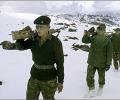
Virtually defending the latest incursion by the People's Liberation Army in the Chumar sector in Ladakh, China on Thursday said its troops were patrolling on its side of the Line of Actual Control and asserted that "status quo" should not be changed pending a final settlement.
India and China on Monday admitted to intrusion by Chinese herdsmen into Ladakh last week but both the sides sought to play it down saying the issue was resolved amicably through a flag meeting.
